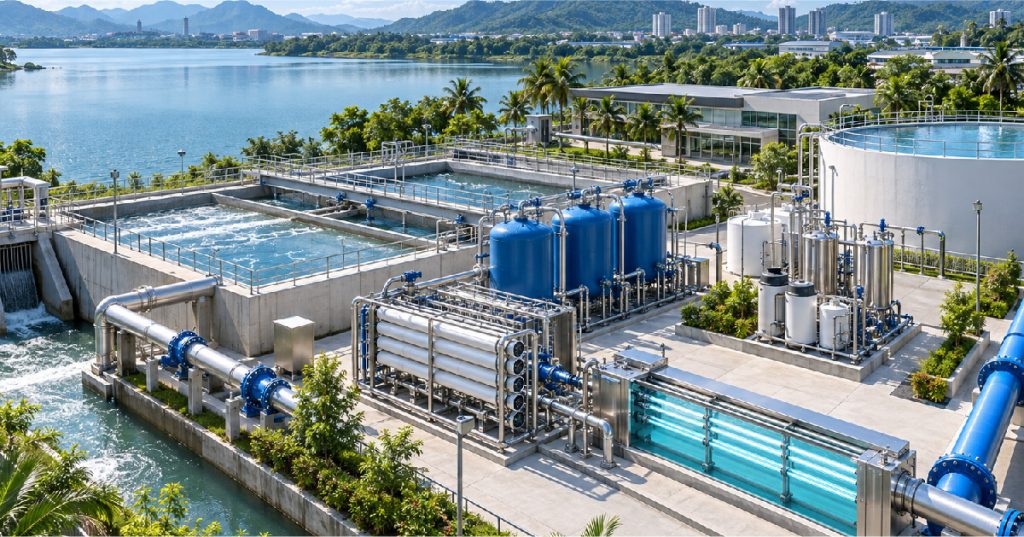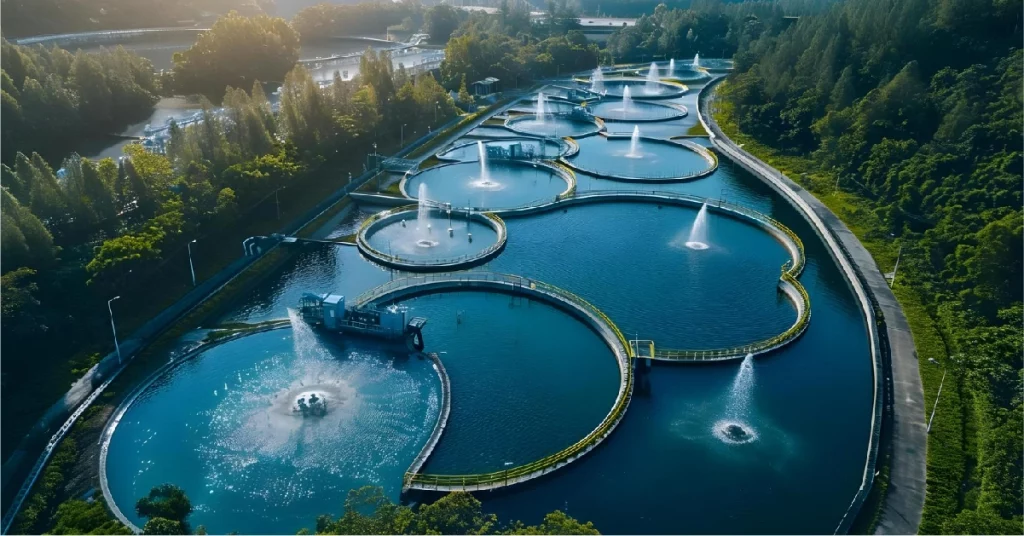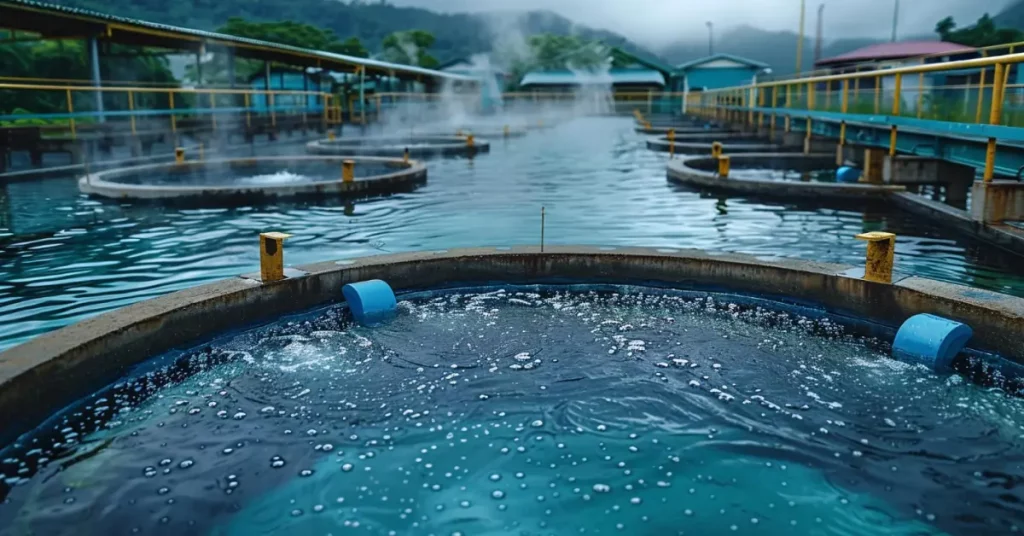

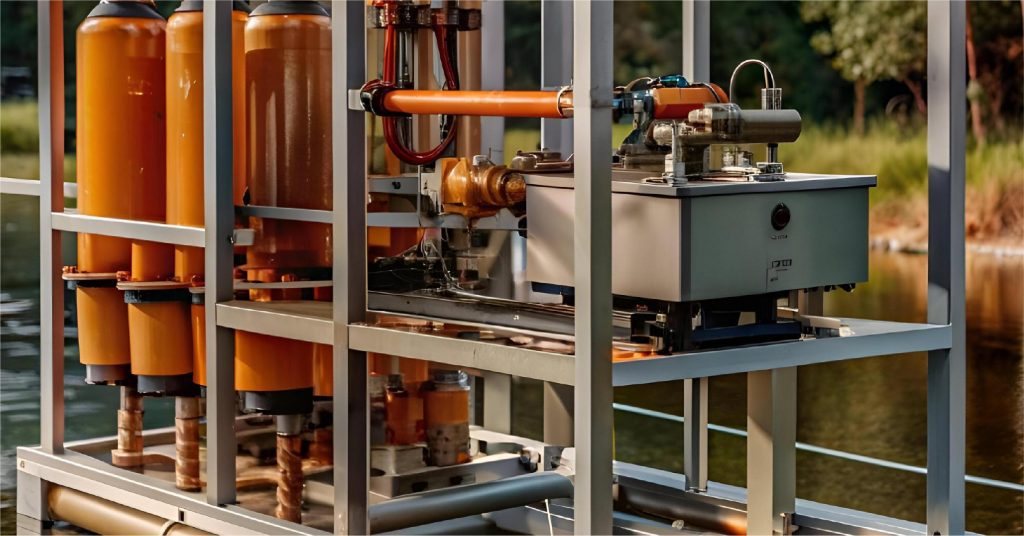
Thailand is entering a new era of water safety and sustainability as industries, municipalities, and regulators focus on emerging contaminants like PFAS and the growing need for high-efficiency purification systems. Per- and polyfluoroalkyl substances — commonly referred to as PFAS chemicals — are now among the most persistent and harmful water pollutants globally.
At the same time, rising water scarcity, climate change, industrial growth, and rising treatment costs are driving interest in high-recovery RO systems that can maximise water reuse and minimise waste. Together, these two priorities are shaping the next wave of water treatment innovation in Thailand.
Why PFAS Has Become a Critical Issue?
PFAS are synthetic chemicals used in industrial processes, firefighting foams, electronics, textiles, and packaging. Their strong carbon-fluorine bonds make them extremely persistent in the environment — earning them the name “forever chemicals.”
PFAS exposure is linked to:
- Cancer
- Immune system disruption
- Thyroid disorders
- Developmental effects
- Liver and kidney damage
Because PFAS are not removed by conventional treatment methods such as sedimentation, sand filtration, or basic carbon filters, Thailand must adopt advanced technologies that can ensure compliance with evolving PFAS regulations.
The Regulatory Landscape Is Changing
Countries such as the USA, Australia, and the EU have already established strict PFAS limits. Thailand is now preparing to strengthen its own regulatory framework as PFAS contamination is increasingly detected near:
- Industrial estates
- Waste treatment facilities
- Airports (due to firefighting foams)
- Electronic manufacturing clusters
- Landfills
As PFAS regulations become more stringent, industries and utilities must adopt proven technologies that can ensure long-term compliance.
Proven Technologies for PFAS Removal
PFAS removal requires advanced, selective, and highly efficient treatment processes. The most successful global technologies include:
1. Granular Activated Carbon (GAC)
Highly effective for long-chain PFAS, widely used for municipal and industrial purification.
2. Ion Exchange Resins (IX)
Specialized resins with affinity for PFAS chemicals provide rapid adsorption and long operational life.
3. Membrane Technologies (NF & RO)
Nanofiltration and reverse osmosis provide physical separation — rejecting both long-chain and many short-chain PFAS molecules.
4. High-Recovery Reverse Osmosis (RO)
Key for industries where wastewater concentration and water reuse are essential.
High-recovery RO not only removes PFAS but also:
- Reduces wastewater volume
- Minimizes operational cost
- Enables water recycling for utilities, production lines, or boiler use
These technologies can be used individually or as part of a combined treatment train for guaranteed removal efficiency.
Why High-Recovery RO Is Becoming Essential in Thailand?
Thailand’s industries — including electronics, petrochemical, food & beverage, and textiles — face increasing water scarcity and rising operational costs. High-recovery RO systems are becoming critical because they:
- Recover 80–90% of feedwater
- Reduce brine and sludge discharge.
- Deliver consistent performance even in fluctuating water conditions.
- Support ZLD (Zero Liquid Discharge) strategies.
- Enable compliance with future PFAS regulations.
- Integrate easily with UF, NF, MBR, and IX systems.
For water-stressed regions like the Eastern Economic Corridor (EEC), these systems offer long-term sustainability and operational resilience.
The Future: PFAS Removal + High-Recovery RO Integration
The most advanced treatment setups combine PFAS adsorption technologies with high-recovery RO to deliver complete purification and water reuse. Typical treatment architecture includes:
- Pre-treatment: UF / activated carbon
- PFAS removal: IX or GAC
- Deep desalination + polishing: High-recovery RO
- Concentration management: Evaporation, crystallization, or further concentration
This integrated approach allows:
- Reliable removal of PFAS chemicals
- Production of ultra-pure water for reuse
- Minimal water waste
- Compliance with future Thai standards
- Reduced operational costs
As Thailand moves toward circular water systems and stricter environmental controls, this combined approach represents the future of industrial and municipal water purification.
Ion Exchange’s Leadership in PFAS & High-Recovery RO Solutions
INDION All Membrane Brine Concentration (AMBC) System
The system efficiently handles seawater RO reject, further concentrating brine for effective treatment and resource recovery. It achieves high concentrations (>20% NaCl) with minimal energy use (7 MPa), offering up to 70% energy savings compared to other brine concentration methods. Its chlorine-tolerant membrane material reduces biological fouling, and energy recovery is optimized for larger capacities. The system utilizes electrical energy exclusively, with no dependence on heat or steam—typically 6-12 kWh/m³—resulting in significant reductions in CAPEX and OPEX. Used in seawater desalination applications, it achieves higher recovery (>55%), and in Zero Liquid Discharge systems, it delivers the lowest lifecycle cost compared to existing processes.
INDION PFAS (Per-and Polyfluoroalkyl Substances) Removal from Ground and Surface Water
A product designed to eliminate toxic PFAS compounds such as PFOA, PFOS, PFHxS, and PFBS from groundwater. PFAS, also known as ‘Forever Chemicals,’ are man-made, highly soluble compounds used in various industries, making them difficult to break down. They can enter the human body through water or food, posing serious health risks.
The Existing Limits of PFAS in Drinking Water:
- Canada – 30 parts per trillion (ppt).
- The U.S. Environmental Protection Agency (EPA) has established individual Maximum Contaminant Levels (MCLs) of 4 ng/L for PFOS and PFOA,10 ppt for PFHxS, or a total PFAS concentration of less than 20 ppt.
The media ensures excellent selective adsorption of PFAS, ranging from 600 to 2200 ppt, with <600 ppm TDS, without altering the feed water quality and with the outlet guarantee of <10 ppt up to 100,000 BV throughout its operation. Ensuring compliance with stringent safety standards, it offers a once-through process, serving as a superior alternative to activated carbon. The resin provides an extended operating life and can be incinerated after use. INDION PFAR is an NSF-61/IAPMO certified resin.
INDION Uranium Selective Resin (USR):
A compact and efficient technology for uranium removal, this innovative adsorption-based synthetic resin selectively removes uranium from groundwater without altering other water characteristics, meeting high demand in both domestic and international markets.
The system ensures selective uranium removal without altering feed water quality and requires no intermediate chemical regeneration. A simple uranium-free water backwash makes it an economical, hassle-free solution that can be designed for solar operation. It reduces uranium levels to <30 ppb, complying with WHO and EPA drinking water standards.
Additionally, the system supports uranium recovery from exhausted resin, handles high TDS levels of up to <1000 ppm, and offers a lifespan of 3–5 years for uranium levels up to 200 ppm, making it a cost-effective and sustainable solution. Its unique features include excellent hydraulics, fast kinetics, no pre-treatment requirement, high physical and mechanical strength, and a high affinity for dissolved uranium with no common ion effect from Cl or SO4. It is also adaptable for use in cartridges, POE a nd conventional systems.
Conclusion
PFAS contamination and rising water scarcity are pushing Thailand toward next-generation purification systems. By deploying advanced PFAS removal technologies and high-recovery RO systems, industries and municipalities can protect public health, secure water resources, comply with future regulations, and move toward long-term sustainability.
Connect with Ion Exchange experts today to explore advanced PFAS removal and high-recovery RO solutions for your Thailand operations.