
Thailand is rapidly embracing Solar Energy as a key pillar of its sustainable development strategy. With rising energy demand, environmental concerns, and increasing pressure on natural resources, renewable energy solutions such as solar power are becoming essential for industries and communities across the country. By integrating solar technology with sustainable infrastructure like water treatment and advanced wastewater treatment, Thailand is moving toward a cleaner and more resilient future.
Solar energy not only reduces dependence on fossil fuels but also supports environmentally responsible industrial growth, improved water management, and long-term ecological balance.
The Growing Role of Solar Energy in Thailand
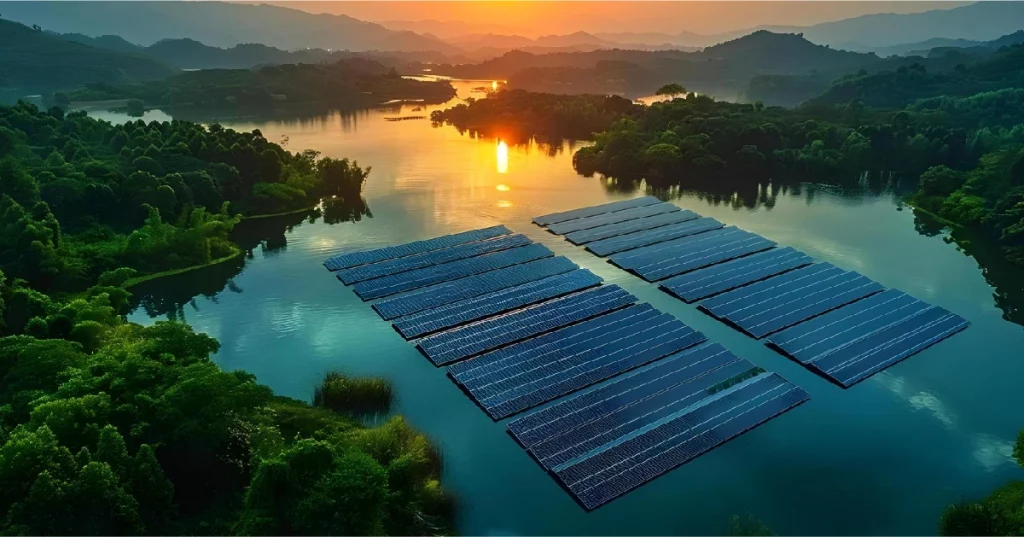
Thailand has significant solar potential due to its tropical climate and high solar radiation levels. Government initiatives and supportive policies have encouraged industries, businesses, and municipalities to invest in solar power systems.
Today, several solar companies in Thailand are helping industries transition toward renewable energy solutions by providing solar power systems for factories, commercial buildings, water treatment plants, and infrastructure facilities.
Key drivers of solar adoption include:
- Rising electricity costs
- Government renewable energy targets
- Corporate sustainability commitments
- Need to reduce carbon emissions
Solar energy allows industries to generate clean power while lowering long-term operating costs.
Solar Energy and Sustainable Water Treatment
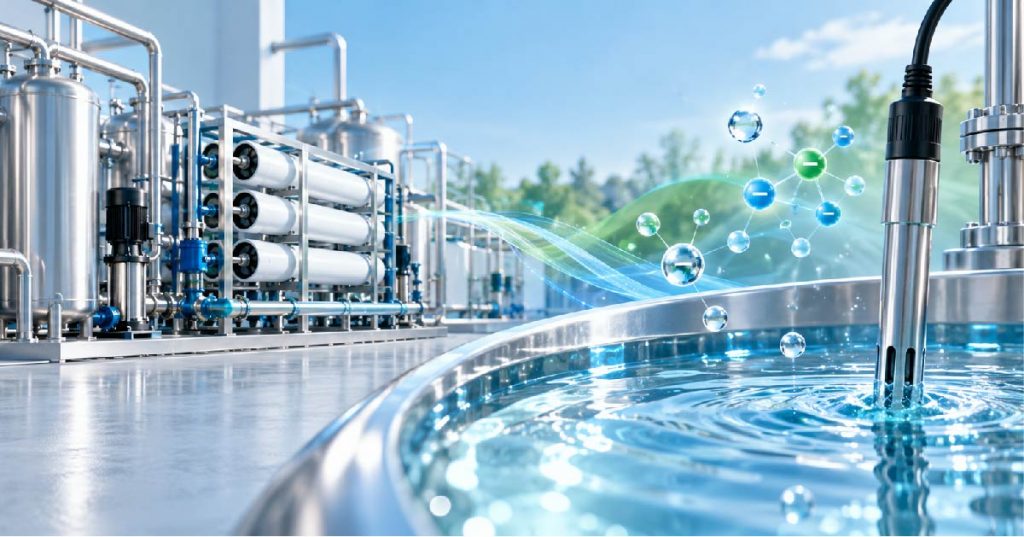
Energy consumption is one of the major cost factors in water treatment operations. Pumping, filtration, aeration, and chemical dosing systems require continuous electricity to function effectively.
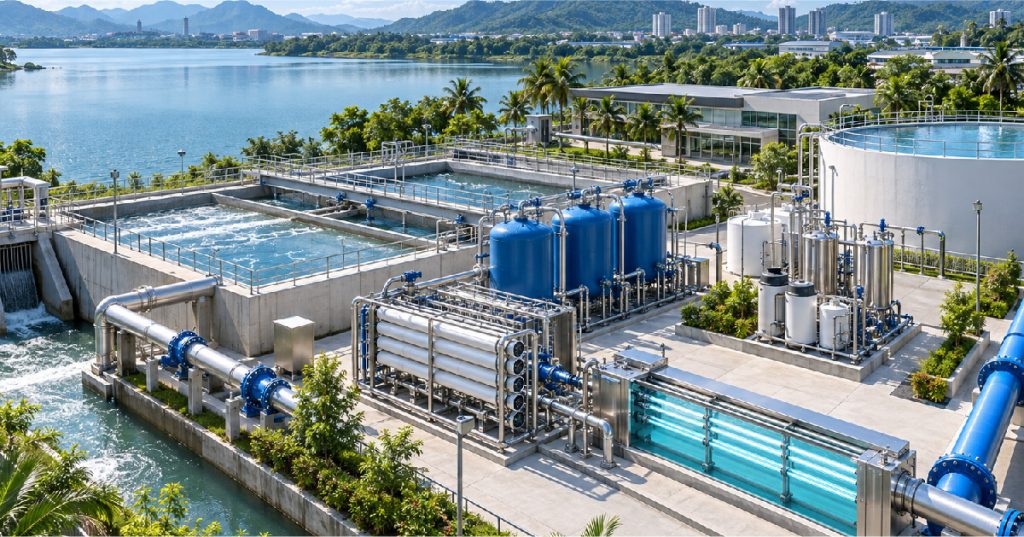
By integrating solar energy into water treatment facilities, industries and municipalities can:
- Reduce energy costs for treatment operations
- Lower carbon emissions from energy consumption
- Ensure uninterrupted power supply for critical systems
- Support sustainable water infrastructure
Solar-powered water treatment plants are particularly useful in remote areas where grid electricity may be limited or unreliable.
Solar Power in Advanced Wastewater Treatment Systems
Modern advanced wastewater treatment technologies rely on energy-intensive processes such as membrane filtration, biological treatment, and evaporation systems.
Solar energy can power key treatment components, including:
- Pumps and aeration systems
- Membrane filtration units
- Monitoring and automation systems
- Sludge treatment equipment
By using renewable energy for wastewater treatment, industries can significantly reduce the environmental footprint of their operations.
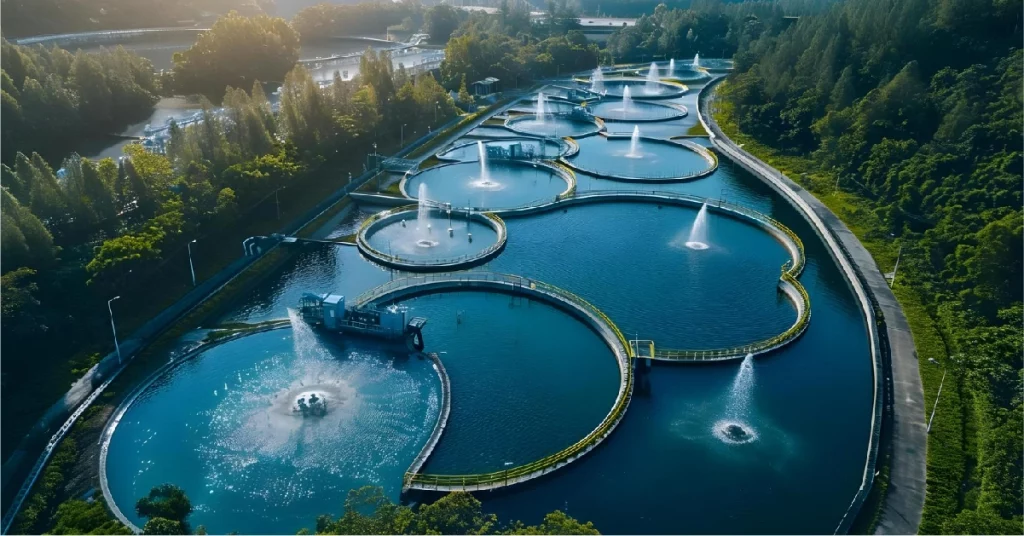
Integrated treatment systems combining biological, physicochemical, and membrane processes are widely used to improve wastewater recovery and minimize discharge. These systems help industries conserve water and reduce pollution while maintaining operational efficiency.
Environmental Benefits of Solar Energy
The adoption of solar energy offers several long-term environmental advantages:
- Reduced Carbon Emissions
Solar power generates electricity without releasing greenhouse gases. - Lower Environmental Pollution
Renewable energy reduces dependence on fossil fuels that contribute to air pollution. - Sustainable Industrial Operations
Industries can reduce their environmental impact by powering operations with clean energy. - Support for Circular Water Management
Solar-powered treatment plants promote sustainable water reuse and wastewater recycling.
The Role of Solar Companies in Thailand’s Energy Transition
Leading solar companies in Thailand are supporting the country’s transition toward renewable energy by providing:
- Industrial solar power systems
- Solar rooftop installations
- Solar-powered infrastructure solutions
- Energy-efficient solutions for water and wastewater treatment plants
Ion Exchange’s Role in Providing Environmental Solutions
A leading dairy cooperative in India, operating under the Gujarat Cooperative Milk Marketing Federation (GCMMF), headquartered in Palanpur, Gujarat, has evolved into one of Asia’s largest and most successful milk producers. Ion Exchange provided a comprehensive water treatment solution, including a 70 m³/h pretreatment unit, 40 m³/h softener, and 30 m³/h and 25 m³/h UF membranes. This solution will condition the raw water, remove hardness for improved water quality, and membranes will help to filter out fine particles and microorganisms, ensuring clean, safe water,r and improve the overall operational efficiency and reduce the maintenance cost. Through these initiatives, the cooperative continues to support rural farmers, strengthen India’s dairy industry, and promote economic sustainability.
One of the leading integrated solar companies partnered with Ion Exchange to implement an advanced water treatment solution. The installation includes a 222 m³/h Multigrade Filter, 174 m³/h Ultrafiltration (UF), 103 m³/h RO-I, 122 m³/h ROII, 2 × 122 m³/h Mixed Bed (MB), and 2 × 71 m³/h Non-Regenerable Mixed Bed (NRMB). Our solutions ensure ultrapure water for manufacturing, enhancing product quality and operational efficiency. It also reflects the company’s commitment to a greener, more sustainable future.
One of India’s leading FMCG companies operates a significant manufacturing facility in Khordha, Odisha. This plant produces a range of beverages, including juices and sparkling drinks. Ion Exchange successfully installed 3 x 71 m³/h pretreatment, 35 m³/h softener, and 2 x 67.5 m³/h UF system. This solution removes impurities and bacteria, ensuring clean and safe water. It also reduces maintenance costs, enhances efficiency,y and extends the equipment lifespan of the customer.
The Future of Solar Energy and Environmental Sustainability
Thailand’s commitment to renewable energy and environmental protection will continue to drive the growth of solar power across multiple sectors. When integrated with sustainable infrastructure such as water treatment and advanced wastewater treatment, solar energy becomes a powerful tool for achieving long-term environmental goals.
By adopting solar-powered solutions, industries and municipalities can reduce energy costs, conserve natural resources, and build a cleaner, more sustainable future for Thailand.
FAQ:
1. Why is process water treatment important in pulp and paper manufacturing?
Process water treatment maintains the required water quality for production while preventing scaling, corrosion, and operational disruptions.
2. What challenges does the pulp and paper industry face in water management?
The industry deals with high water consumption, complex industrial wastewater, and strict environmental discharge standards.
3. How do biological treatment systems improve wastewater quality?
Biological treatment uses microorganisms to break down organic pollutants, helping reduce BOD, COD, and other contaminants.
4. How can paper mills reuse treated water in production processes?
Treated wastewater can be recycled for washing, cooling, and other production operations through efficient water reuse systems.
5. How did Ion Exchange support PT RAPP with large-scale water treatment solutions in Indonesia?
Ion Exchange delivered advanced pretreatment, demineralisation, and clarifier systems for PT RAPP, supporting one of the world’s largest pulp and paper water treatment facilities.