
Thailand is one of the world’s leading rice producers, with thousands of rice mills operating across the country. While rice milling is essential for the food supply chain, it also generates significant volumes of wastewater during cleaning, soaking, parboiling, and processing operations. Managing this wastewater effectively is critical for protecting the environment and ensuring sustainable production. An advanced Effluent Treatment Plant (ETP) plays a vital role in treating industrial wastewater generated from Rice Mill Operations and supporting responsible water treatment practices.
Rice mill wastewater typically contains organic matter, suspended solids, husk particles, starch residues, and dissolved pollutants. If this wastewater is discharged without treatment, it can pollute nearby water bodies, harm aquatic ecosystems, and lead to regulatory penalties. Implementing reliable wastewater treatment plants, therefore, helps rice mills maintain compliance with environmental regulations while improving operational efficiency.
Importance of Effluent Treatment for Rice Mill Operations
In rice mills, large quantities of water are used for washing paddy, soaking grains, steaming, and cleaning equipment. These processes produce wastewater with high organic load and suspended solids. Without proper treatment, such wastewater can significantly increase biological oxygen demand (BOD) and chemical oxygen demand (COD) levels in receiving water bodies.
Installing an advanced Effluent Treatment Plant (ETP) allows rice mills to treat wastewater before discharge or reuse. Efficient water treatment systems help reduce pollutants, improve water quality, and minimize the environmental impact of Rice Mill Operations.
Key Stages of an Effluent Treatment Plant (ETP)
Modern wastewater treatment plants designed for rice mills typically follow a multi-stage treatment process to remove contaminants effectively.
Primary Treatment
Primary treatment focuses on removing large particles and suspended solids from wastewater. Processes such as screening, grit removal, and sedimentation help separate husk fragments, sand, and organic debris. This stage prepares the wastewater for biological treatment by reducing the initial pollutant load.
Biological Treatment
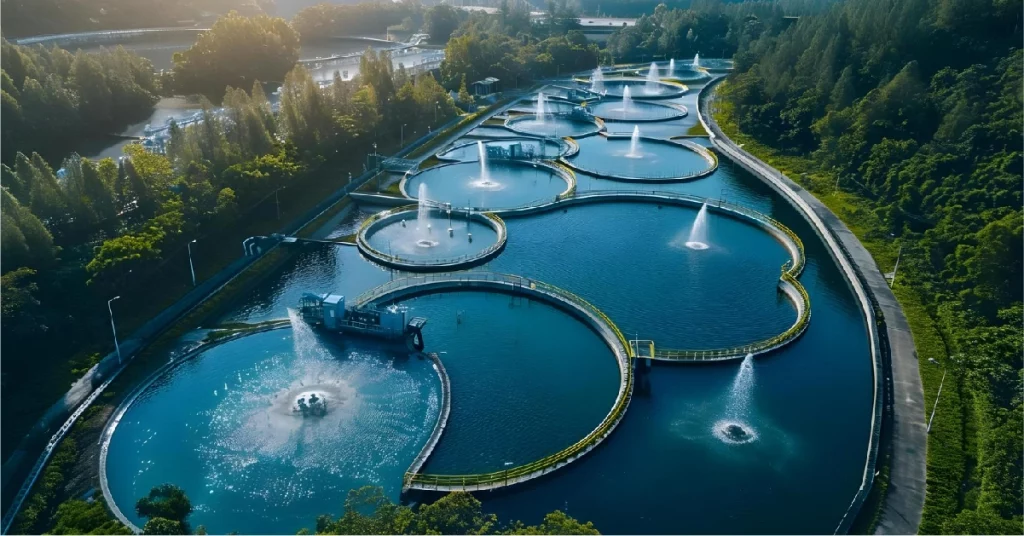
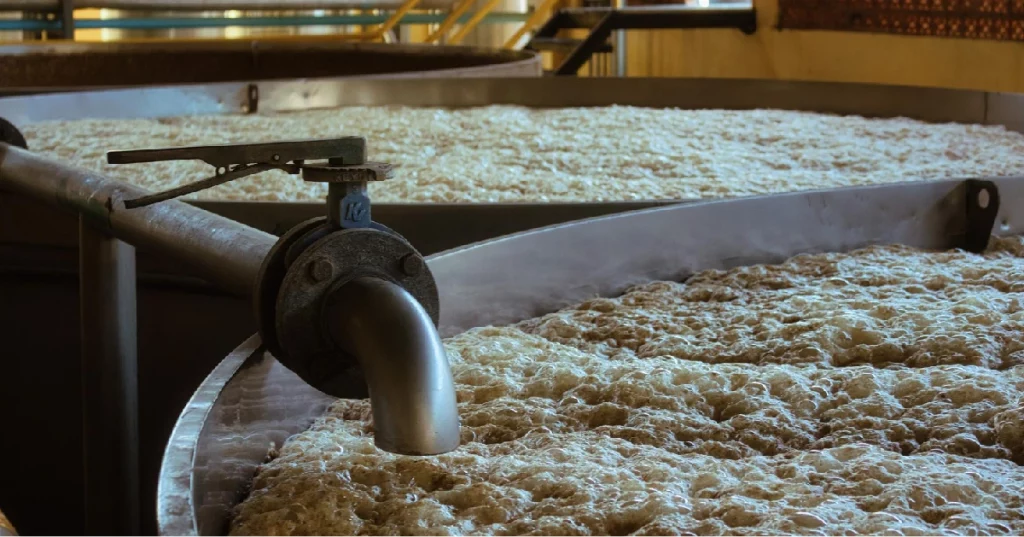
Biological treatment is a critical stage in wastewater treatment plants. Microorganisms are used to break down the organic matter present in rice mill wastewater. Systems such as activated sludge processes, aerated lagoons, and sequencing batch reactors (SBR) help reduce BOD and COD levels significantly.
These biological processes convert organic pollutants into simpler compounds, improving the quality of treated water.
Advanced Water Treatment
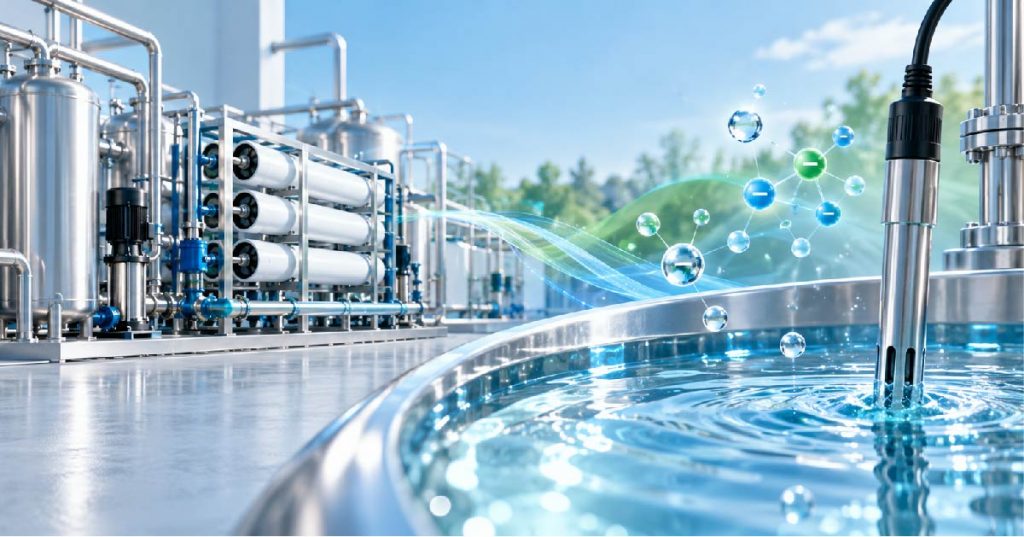
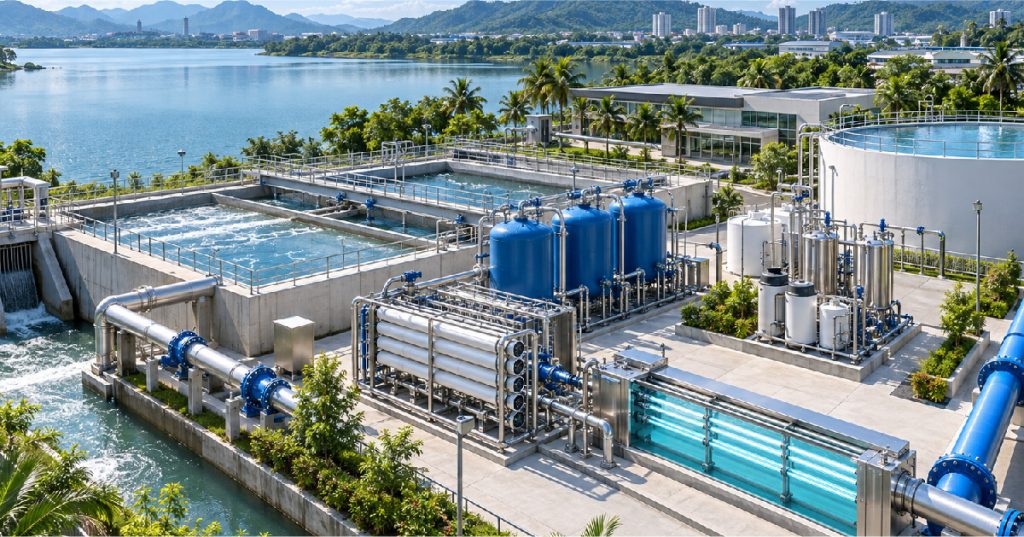
After biological treatment, advanced water treatment technologies help polish the treated water and remove remaining contaminants. Technologies such as ultrafiltration (UF), reverse osmosis (RO), and advanced filtration systems ensure that treated water meets discharge or reuse standards.
Advanced treatment systems also enable water reuse within Rice Mill Operations, reducing the demand for freshwater resources.
Sludge Management
During wastewater treatment, sludge is generated as a by-product. Proper sludge treatment and dewatering are essential to minimize waste and enable safe disposal or reuse. Technologies such as filter presses and centrifuges help reduce sludge volume and improve handling efficiency.
Benefits of Advanced Effluent Treatment Plants for Rice Mills
Implementing modern Effluent Treatment Plant (ETP) systems offers multiple operational and environmental benefits for rice mills in Thailand:
- Reduction of wastewater pollution
Compliance with environmental discharge regulations
Improved water treatment efficiency
Lower freshwater consumption through water reuse
Enhanced sustainability of Rice Mill Operations
By adopting advanced wastewater treatment plants, rice mills can ensure responsible water management while maintaining production efficiency.
Ion Exchange Solutions for Industrial Wastewater Treatment
INDION Rice Mill Effluent Treatment Plant (ETP)
INDION Rice Mill ETP is a reliable, compact system designed with a wide range of capacities: 25, 50, 100, 150, 200, 250 KLD, and can handle a 15-20% shock load. The influent first passes through an equalization tank in which inlet flow characteristics and flow are equalized. This equalized effluent then passes through primary treatment for removal of suspended / floatable solids,s followed by organics removal by a set of biological reactors. It finally undergoes tertiary polishing treatment with chlorination and filtration, thereby producing consistent treated effluent quality. It requires less chemical consumption & maintenance, produces a low quantity of digested sludge, consumes less power & helps in saving operational cost. It ensures easy up-gradation and extension of existing wastewater treatment plants.
Towards Sustainable Rice Mill Operations
As Thailand continues to strengthen environmental regulations and promote sustainable manufacturing, effective wastewater treatment plants will become increasingly important for the rice milling industry. Advanced Effluent Treatment Plant (ETP) systems allow rice mills to treat wastewater responsibly, conserve water resources, and maintain compliance with environmental standards.
By investing in reliable water treatment solutions and integrated wastewater treatment plants, rice mill operators can support sustainable production while protecting Thailand’s valuable water resources.
Connect with Ion Exchange experts to learn how advanced Effluent Treatment Plant (ETP) solutions can help optimize wastewater treatment plants and improve sustainability in Rice Mill Operations.
FAQ:
1. Why do rice mills need an effluent treatment plant (ETP)?
Rice mills need an Effluent Treatment Plant (ETP) to treat wastewater generated during washing, soaking, and processing, ensuring pollution prevention and compliance with environmental regulations.
2. What pollutants are commonly found in rice mill wastewater?
Rice mill wastewater typically contains organic matter, starch, husk particles, suspended solids, and dissolved pollutants that increase BOD and COD levels if untreated.
3. Can treated wastewater from rice mills be reused?
Yes, treated wastewater can be reused for cleaning, cooling, and process applications using advanced water treatment systems such as filtration, UF, and RO.
4. What factors affect the performance of an ETP system?
ETP performance depends on wastewater load, treatment technology, proper operation, biological activity, and regular maintenance of the wastewater treatment plant.
5. How does Ion Exchange provide solutions for rice mill wastewater treatment?
Ion Exchange offers INDION Rice Mill ETP systems with primary, biological, and tertiary treatment stages that ensure reliable wastewater treatment, low operating cost, and consistent effluent quality.