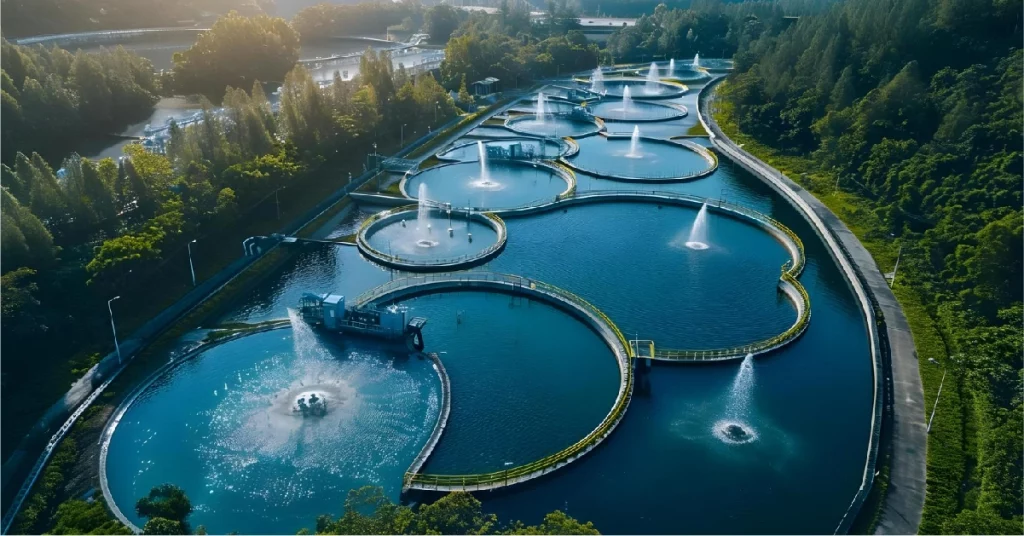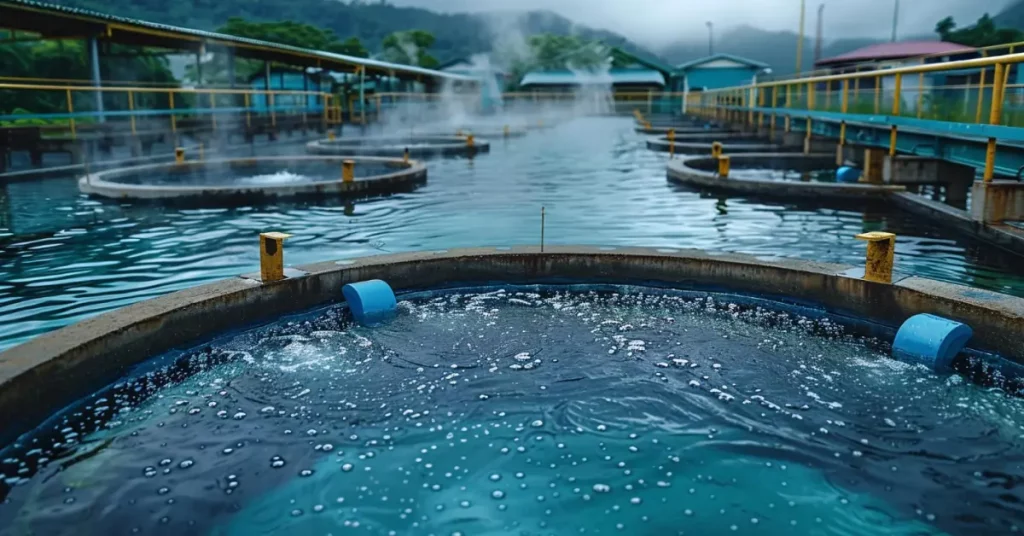

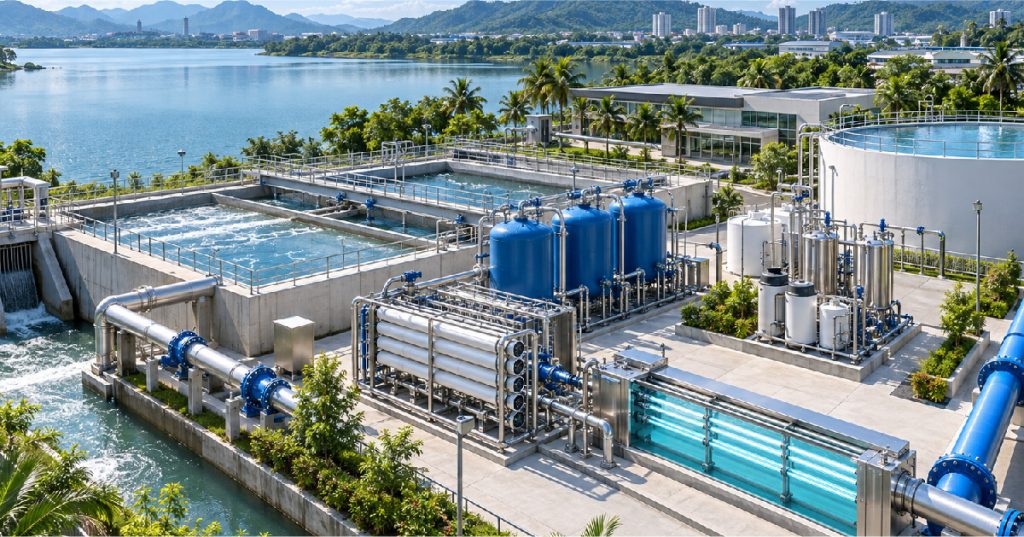
Thailand’s water needs are changing fast. Urban growth, industrial expansion, tourism, food processing, and rising expectations around water quality are putting greater pressure on businesses and communities to manage water carefully. The challenge is not simply finding enough water. It is ensuring that the water entering a facility is consistently suitable for its intended use.
That is where water treatment systems become critical. From manufacturing facilities and hotels to food plants and pharmaceutical operations, proper treatment helps control suspended solids, dissolved contaminants, hardness, microorganisms, and other impurities that can affect safety, product quality, and equipment performance. For businesses in Thailand, water treatment is no longer just a utility function. It has become part of operational resilience.
Why Water Quality Needs a Systematic Approach in Thailand?
The quality of water is influenced by many factors, including its source, season, geographical location, and local infrastructure. Water drawn from different sources, such as industrial use, municipal, or groundwater, can raise distinct issues.
One of the sources of water may experience high levels of hardness, while others might become susceptible to contamination with dissolved salts or microbes. For this reason, water treatment must start with proper analysis before obtaining equipment.
According to Thailand’s Department of Health, quality assessment of drinking water is conducted based on physical, chemical, and biological parameters. In practice, this means that water cannot be judged just by its physical properties. Even clear water may contain harmful substances that must be treated in order to make it safe for drinking.
A well-designed water treatment system in Thailand therefore starts by understanding the raw water and defining the quality required at the outlet.
How Water Treatment Systems Make Water Safer?
There is rarely one technology that solves every water quality problem. Effective treatment usually combines several stages, with each stage handling a particular group of contaminants.
-
Pretreatment Reduces the Initial Contaminant Load
Unprocessed water can contain sediments of sand, silt, suspended solids, biomatter, and cloudiness. The processes of clarification, resorting to multimedia filtration,n and using filtration cartridges may eliminate some of these contaminants before the water is treated further.
Apart from improving clarity, good pretreatment is also aimed at protecting downstream membranes and ion exchange systems from excessive pollutants.
-
Membrane Treatment Improves Water Purity
Technologies such as reverse osmosis and ultrafiltration are often employed when tighter control of water quality is needed. Reverse osmosis can eliminate dissolved salts and many other contaminants, allowing it to be applied in everything from process water to industrial applications requiring higher purity.
When selecting a water purification system in Thailand, companies must consider more than simply plant capacity. Factors such as the chemistry of feed water, potential for membrane fouling, recovery desired, energy usage, and the required quality of end products all must be taken into consideration.
In fact, choosing the system by flow rate might seem like a good financial decision at first; however, a poor match between the technology and the feed water will increase the operating costs later.
-
Ion Exchange Controls Hardness and Dissolved Ions
Hard water can lead to scale formation in boilers, heat exchangers, pipelines and process equipment. Ion exchange resins are widely used for softening, demineralisation and specialised purification where particular dissolved ions need to be removed.
For industrial water treatment operations in Thailand, the right combination of resin selection, pretreatment and regeneration can support more consistent water quality while helping protect critical plant equipment.
-
Disinfection Provides an Important Safety Barrier
Microbial control becomes particularly important where water is intended for drinking, food handling, hospitality, or other applications involving human contact.
Depending on the application, disinfection can involve chlorination, ultraviolet treatment, ozonation, or a combination of technologies. A drinking water treatment Thailand solution should therefore address both contaminant removal and microbiological control, backed by monitoring that confirms the treatment system continues to perform correctly.
Choosing the Right Water Treatment Plant in Thailand
The best water treatment plant Thailand businesses can install is not necessarily the one containing the largest number of treatment stages. It is the system that delivers the required water quality reliably without creating unnecessary operating complexity.
There are several important queries that a company must consider before selecting its future plant. What is the main source of water? How does the quality of the source water change during the year? What is the actual quality that will be needed? What is the attainable recovery rate? How much area is available? After all, who will operate the plant once it is completed? Answers to these questions determine the choice of technologies and methods, plant layout, required chemicals, automation level, and costs throughout the life cycle.
A well-planned water treatment plant Thailand project should also account for future growth. A facility designed only around current consumption can become a constraint when production expands. Modular equipment and sensible design margins can make future capacity additions easier.
Industrial Water Treatment in Thailand Goes Beyond Compliance
Industrial users do not treat water solely because regulations tell them to. Often, their production process demands a particular water quality.
In pharmaceuticals, power, and other precision operations, inconsistent water chemistry may affect process reliability. In food and beverage facilities, water quality can influence hygiene and the finished product. Textile, chemical and paper manufacturers may require carefully controlled water characteristics to maintain process consistency.
That makes industrial water treatment in Thailand a production issue as much as a water issue.
Properly designed treatment can prevent scaling, corrosion,n and fouling of membranes, leading to unnecessary maintenance of equipment. Additionally, treatment can provide possibilities for recovery and reuse of water in places where proper treatment and operational management are implemented.
However, one of the most important points to consider is that companies need to take the whole water cycle into account rather than treating raw water, process water, er and wastewater as separate systems. Very often, the most significant opportunities for efficiency improvement reveal themselves during the whole site evaluation.
What to Look for in a Water Treatment Company in Thailand?
Buying water-treatment equipment is relatively straightforward. Finding a partner capable of supporting the plant throughout its operating life requires more thought.
A capable water treatment company that Thailand businesses work with should understand raw-water conditions, production requirements, wastewater characteristics, and site constraints. It should also offer expertise across different technologies rather than attempting to solve every problem with one standard treatment process.
The significance of local assistance cannot be overlooked. Membranes, resins, chemicals, pumps, and several other vital components necessitate maintenance or repair at some point in time. Immediate availability of consumables and technical assistance can profoundly influence operations when production is dependent on uninterrupted water supply.
A strong water treatment company in Thailand should also be able to connect water treatment with wastewater treatment, sewage treatment, reuse, and Zero Liquid Discharge where required. That broader perspective helps organisations move from isolated treatment plants towards integrated water management.
Ion Exchange: Integrated Water and Wastewater Solutions for Thailand
Ion Exchange has been operating in Thailand for more than three decades, serving industries, institutions, homes and communities with water and environment management solutions. Its experience in the country covers sectors including food and beverage, textiles, chemicals, power, pharmaceuticals, oil and refining, and paper. The company also maintains local warehousing for critical spares, consumables, resins and membranes to support customer requirements.
For organisations evaluating water treatment systemsin Thailand, Ion Exchange provides both standardised and customised solutions. Its portfolio covers potable and industrial water treatment, membranes, INDION ion exchange resins, speciality chemicals, instrumentation and automation, wastewater treatment, sewage treatment and Zero Liquid Discharge solutions.
This integrated capability proves especially useful as water needs change. For instance, a facility that addresses raw-water quality problems today may require wastewater recycling, better recovery, or even zero liquid discharge technology later on.
Ion Exchange provides operations and maintenance, upgrades and modifications, audits and consulting, and also spare parts and consumables. Thus, it shifts the discussion from just buying the equipment to either doing regular maintenance or getting the process running productively.
Building a Safer and More Resilient Water Strategy
Safe water does not come from installing a filter and assuming the job is finished. It depends on understanding source-water variability, selecting the right treatment barriers, monitoring performance,e and maintaining equipment correctly.
For industrial, commercial and community applications, water treatment systems can help protect people, processes and equipment while creating a stronger foundation for water conservation, reuse and long-term water security.
If your organisation is planning a new water purification systemin Thailand project, reviewing drinking water treatment Thailand requirements or upgrading an existing facility, Ion Exchange can help assess your complete water cycle and develop a solution around actual site conditions.
Talk to Ion Exchange Thailand about your water quality challenges, treatment requirements, and future water-management goals.
Frequently Asked Questions
What is a water treatment system used for?
A water treatment system enhances the quality of raw/treated water through removal or regulation of fine solids, hardness minerals,r dissolved impurities, microorganisms,s and other pollutants. The method for treating water varies according to the source of water and whether it is to be made available for drinking, commercial or industrial use.
Which treatment method is suitable for drinking water in Thailand?
There is no universal process suitable for every water source. Treatment may include clarification, filtration, activated carbon, membrane technologies, and disinfection depending on raw-water analysis and the required drinking-water quality.
What should industries check before installing a treatment plant?
Industries must consider the chemistry of raw water, daily water supply, production requirements, seasonal fluctuations, availability of space, electricity, chemicals used, wastewater generated,d and maintenance capabilities prior to the choice of plant design.
How does reverse osmosis support industrial water treatment?
Reverse osmosis is used to decrease dissolved salts and other impurities within the water. It can be applied in the preparation of process water, boiler water,r and other processes requiring specific water characteristics. However, its effectiveness depends on correct pretreatment and proper operating parameters.
Why work with an integrated water and wastewater treatment partner?
An integrated partner can evaluate raw water, process water, wastewater, reuse and discharge requirements together. This helps improve compatibility between systems, simplifies accountability, and can reveal opportunities to reduce freshwater consumption and recover more water.